When Is the Calving Season? December to March, Month by Month
One of the first questions we hear is simple: which week should I come? The honest answer is that the herds follow the rain, not a calendar. But the pattern is reliable enough to plan around, and each month has its own character.
December: the herds arrive
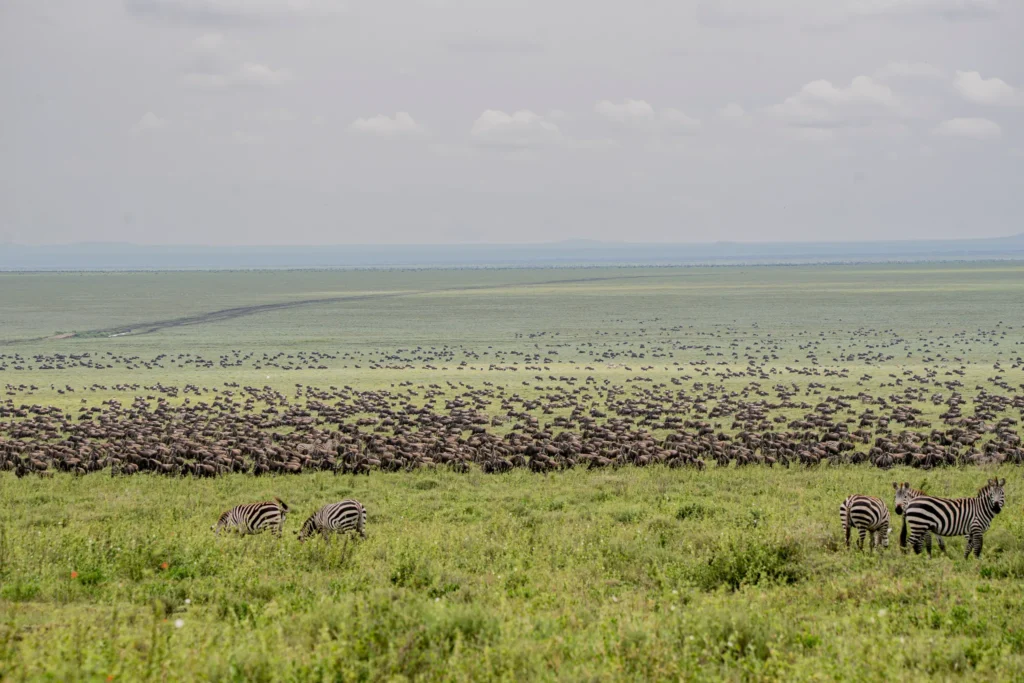
The short rains of November and December turn the southern plains green, and the wildebeest pour in from the north. By the end of December they are usually spread across the Ndutu area and the plains toward Naabi Hill. A few early calves appear. It is a lovely, uncrowded month, and the festive season brings families who want a safari over the holidays.
Good for: big herds, quieter roads, holiday trips.
January: settling in
January is often a short dry spell between the rains. The herds graze, rest and gather in huge numbers. Births increase steadily through the month, and by late January many years are already in full swing. Predators shadow the herds closely.
Good for: a balance of births, predators and fewer vehicles. Late January is an excellent alternative to February.
February: the peak
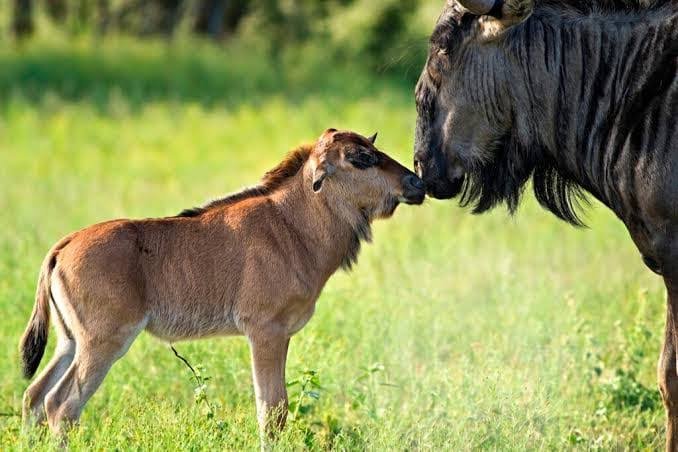
February is the heart of the calving season. In a burst of two to three weeks, a very large share of the year’s calves are born, sometimes thousands in a single day. Lions, hyenas and cheetahs have more opportunities than at any other time of year. If you want the best chance of seeing a birth and a hunt on the same morning, this is your month.
It is also the busiest month. Camps fill early, and European school holidays add demand in mid-February.
Good for: births, predator action, photography.
March: growing up
By March the calves are stronger and quicker. The herds start to drift west and north-west as the long rains build, so they can be more spread out. Some days are wet, but the landscape is at its greenest and visitor numbers fall. Late-born calves are still around early in the month.
Good for: green landscapes, fewer people, better rates in some camps.
Our advice
- If you want the best odds: 1 to 25 February.
- If you want fewer vehicles but still a strong chance: the last ten days of January.
- If you love green landscapes and value: early March.
- Whichever you choose, stay at least three nights near the herds.
For the rest of the year, see the Great Migration month by month and the best time for a safari in Tanzania. For the bigger picture, start with our complete calving season guide. If you are deciding between the calving and the river crossings, read calving season vs river crossings.