4 days · Tanzania · Birding safari
Lake Natron Birding Safari
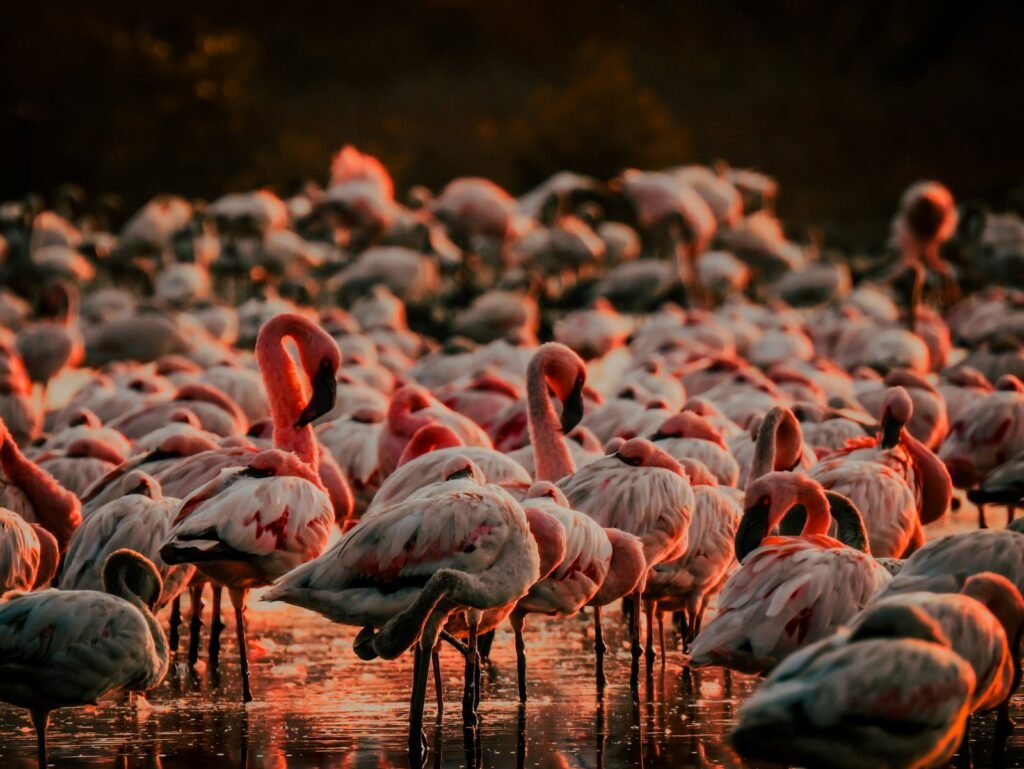
Lake Natron lies in the floor of the Rift Valley near the Kenyan border, a shallow soda lake beneath the active volcano Ol Doinyo Lengai. It is the most important breeding ground on earth for the lesser flamingo, and the shoreline, springs and plains around it hold more than 200 species. This short safari takes you off the main circuit into one of Tanzania’s most dramatic landscapes, at a birder’s pace.
Enquire about this safariDuration
4 days / 3 nights
Route
Arusha · Mto wa Mbu · Engaruka · Lake Natron
Best time
August to October for flamingo breeding · November to April for migrants
Ideal for
Birders, photographers and adventurous travellers
The flamingo lake
Lake Natron’s water is so rich in salt and soda that few animals can live in it, but the algae that thrive there feed huge flocks of lesser flamingos. Most of the world’s lesser flamingos are hatched here, on remote mudflats in the middle of the lake that are protected and impossible to reach, which is exactly why the birds choose them. What you see are the feeding flocks along the southern shore, often thousands of birds turning the shallows pink, with greater flamingos among them. Numbers vary with the water level, and the largest gatherings usually come with the breeding season from August to October. The shoreline also draws waders such as the chestnut-banded plover and little stint, and in the northern winter white-winged terns and other migrants. Inland, the Engaruka basin and the Rift Valley escarpment add raptors, larks, bustards and seasonal flocks of storks. Your guide is a specialist birder, and local Maasai guides lead the walks along the shore, where the lake is best explored on foot.
Itinerary
Day by day
A short, adventurous trip off the main circuit. It works well on its own, before the Serengeti, or as an extension to our Tanzania Birding Safari.
Day 1 · Arusha to Lake Natron
Drive west to Mto wa Mbu, where the market town’s rice fields and groundwater forest are good for weavers and waterbirds, then north on a rough road past the ruins of Engaruka and down the Rift Valley escarpment, watching for raptors and dry-country birds along the way. Arrive at a tented camp near the lake in the late afternoon.
Day 2 · Flamingo shoreline at dawn
An early walk with a Maasai guide across the flats of the southern shore to the feeding flamingos, when the light is soft and the volcano rises behind them. Waders, plovers and terns work the shallows. In the afternoon, a walk up the Engare Sero gorge to a waterfall, with cliff and riverine birds.
Day 3 · Engaruka basin and the springs
A full day exploring the freshwater springs and marshes south of the lake and the open plains of the Engaruka basin, where glossy ibis, storks, bustards and larks are possible. Evening back at the shore for flamingos at sunset.
Day 4 · Return or continue
A last morning on the shore, then the drive back to Arusha, or onwards through Loliondo into the northern Serengeti.
When to go
August to October brings the biggest flamingo gatherings. From November to April, birds that winter here from Europe and Asia join the residents, and the landscape turns green. The area is hot all year, so the best birding is early and late in the day.
Extend your journey
Add the night climb of Ol Doinyo Lengai, combine with our 10-day Tanzania Birding Safari, or continue to the Serengeti.
Included
— Private 4x4 safari vehicle with pop-up roof
— Specialist birding guide
— Local Maasai guide for shoreline walks
— Spotting scope and field guide in the vehicle
— Conservation area and village fees
— Accommodation and meals as per itinerary
— Transfers from Arusha and 24/7 support
Not included
— International flights and visas
— Travel insurance (required)
— Binoculars (please bring your own)
— Ol Doinyo Lengai climb
— Tips for guides and camp staff
— Premium drinks and personal items
Join us at Lake Natron
Tell us your dates and the birds you most hope to see. We will advise on flamingo numbers for your travel month and design the trip around you.
Enquire nowMore safari experiences
10 days
Tanzania Birding Safari
1 day
Ol Doinyo Lengai Night Climb
3 days