Tanzania · National park
Serengeti National Park
Endless plains and the Great Migration
Size
About 14,750 km²
Location
Northern Tanzania
Best time
Year-round
Known for
Great Migration · Big cats
About the park
The world's most famous wildlife stage
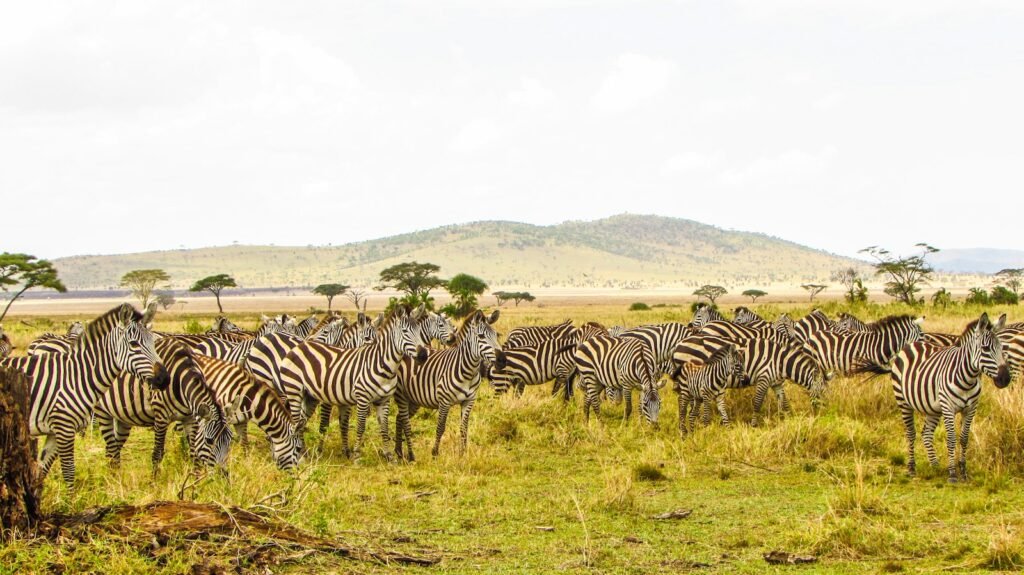
The Serengeti is Tanzania's oldest and best-known national park, a UNESCO World Heritage Site covering nearly 15,000 km² of grassland, acacia savanna, riverine forest and granite outcrops called kopjes. Its name comes from the Maasai word for “endless plains”, and standing on them you understand why.
Together with Kenya's Maasai Mara it forms one ecosystem through which the Great Migration moves all year. Outside the migration, the Serengeti has some of the highest densities of lion, leopard and cheetah in Africa, which means superb game viewing in every season. Different areas shine at different times of year, so we always choose your camps by month.
Highlights
Why visit the Serengeti

The Great Migration
Calving in the south Jan–Mar, the Grumeti around June and Mara River crossings Jul–Oct.

Big cats
Lion prides on the kopjes, leopards in the Seronera valley and cheetah on the open plains.

Balloon safaris
Float over the plains at sunrise, then land for a bush breakfast.

Kopjes & plains
Granite outcrops rising from endless grassland, favourite lookouts for lions.

When to visit
Excellent all year. Visit the south (Ndutu) December–March for calving, the Western Corridor around June, and the north July–October for the river crossings. Central Seronera is good in every season.

Wildlife you may see
Wildebeest, zebra, Thomson's gazelle, lion, leopard, cheetah, spotted hyena, elephant, giraffe, buffalo, hippo, crocodile and more than 500 bird species.

Getting there
About 7–8 hours by road from Arusha via the Ngorongoro highlands, or a 1–2 hour scheduled flight to one of the park's airstrips.
Visit with Asili
Safaris to the Serengeti
7 days
The Great Migration Safari
7 days
Mara River Crossing Safari
7 days
Luxury Calving Season Safari
Plan your Serengeti safari
Tell us when you'd like to travel and we'll match your camps to the best area of the park for that month.
Enquire now